


You've Finished Your Manuscript - What Happens Next? A Book Editor's Complete Guide


So, you’ve finally typed “The End”... woohoo! Congratulations!! 😊🎉
Whether you've spent six months, six years, or what feels like an entire lifetime writing your novel, finishing the first draft is a huge achievement.
But if you're staring at your completed manuscript wondering what you're supposed to do with it now, don't worry. You're certainly not alone.
There's an important distinction I'd make here:
Finishing your first draft isn't the same as finishing your book.
That doesn't mean your manuscript is bad. It simply means that writing the first draft is one stage of the process, and there are usually several more to go before your book is ready to send to literary agents, publishers, or paying readers.
And, as someone who has been through this process myself, and subsequently become a professional book editor, I know just how confusing that middle ground can be.
So, let's look at what you should actually do after finishing your novel.
1. Put the manuscript away for a while
First things first: take a break.
You've probably been staring at the same characters, chapters and sentences for months. Maybe you've rewritten the same scene five times. Maybe you're so sick of your protagonist that you never want to hear their name again.
I've been there.
When I was writing my own fantasy novel, I reached a point where I had rewritten the entire thing several times but still couldn't work out why the story wasn't working. I eventually became so frustrated that I almost gave up on it altogether.
Sometimes, the best thing you can do is step away.
Give yourself some distance from the manuscript before you start seriously editing it. You don't necessarily need to follow a strict rule about how long you should leave it; the important thing is that you give yourself enough breathing room to return to the story with fresher eyes.
When you've only just finished writing, you're often reading what you intended to write rather than what's actually on the page.
So, a little distance can make it much easier to spot problems you couldn't see before.
And, perhaps just as importantly, it gives your brain a chance to recover.
2. Read your manuscript from beginning to end
When you're ready to return to your book, read the entire manuscript. But don't immediately start correcting commas. Instead, concentrate on the big picture.
Ask yourself:
Does the story make sense?
Is there a clear beginning, middle and end?
Does the plot progress naturally?
Are there any obvious plot holes?
Do the characters have believable motivations?
Does the pacing work?
Are there scenes that don't actually need to be there?
Are there parts where the story becomes boring or confusing?
Does the ending feel satisfying?
Does the manuscript actually deliver what the opening promises?
Is the word count appropriate for the genre and intended audience?
This is the stage where you're looking at the development of your book, rather than worrying about individual sentences.
That's important because there's little point perfecting a beautifully written chapter if you later realise that the entire chapter needs to be removed.
Big problems first. Tiny problems last.
That's probably the most useful rule I can give you when it comes to editing, because if you discover a huge plot hole, there's no point spending three hours making the grammar in that section perfect.
You might end up deleting the whole thing anyway.
3. Start self-editing, but do it in stages
Once you've identified the bigger problems, it's time to start revising. If you're doing this yourself, my self-editing process can help you work through your manuscript methodically rather than trying to fix everything at once.
I'd recommend breaking the self-editing process into stages rather than attempting to fix everything simultaneously.
I divide the process into three broad areas:
Developmental editing → line/copy editing → proofreading.
Trying to do all three at once can become overwhelming, and you're much more likely to miss things.
Stage 1: Developmental editing
Developmental editing focuses on the foundations of your story, so for fiction, this might include:
plot and subplots
structure
pacing
character development
dialogue
point of view
narrative voice
genre expectations
consistency
Ask yourself whether the story actually works before worrying about whether every sentence is beautifully written.
Is your protagonist's goal clear?
Do their actions make sense?
Are there scenes that don't move the story forward?
Are your subplots relevant and properly resolved?
Does the story begin in the right place?
Are there sections that drag?
Are there moments where the reader is likely to become confused?
These are the kinds of questions that can make a huge difference to a manuscript.
Stage 2: Line and copy editing
Once you're happy with the story itself, you can move closer to the actual writing, which is where you might look at:
clarity
sentence structure
flow
repetition
grammar
punctuation
spelling
consistency
tense
descriptions
dialogue
tone and mood
Line editing tends to look more closely at how the writing flows and how the language affects the reader, while copy editing focuses more heavily on technical accuracy and consistency.
Stage 3: Proofreading
Proofreading comes last, making it your final opportunity to catch things such as:
typos
spelling mistakes
punctuation errors
formatting issues
inconsistencies
missing words
And yes, there will probably still be mistakes hiding in there. There always seem to be, but that's exactly why proofreading is the final safety net rather than the first step.
4. Don't rely entirely on Grammarly or AI
Tools such as Grammarly and other automated writing software can certainly be useful - AI maybe not so much.
They can help you spot certain spelling, grammar and punctuation issues, and there's nothing wrong with using them as part of your self-editing process. Again, maybe not AI.
But software such as Grammarly or ProWritingAid isn't a substitute for an editor.
A computer programme can flag a sentence that appears grammatically unusual, but it doesn't understand your entire story in the way a human reader can.
It doesn't know that your character deliberately speaks in fragmented sentences.
It doesn't understand why you've chosen a particular word for thematic reasons.
It can't look at your entire manuscript and tell you that your protagonist's motivation stops making sense halfway through the story.
And it can't assess whether your plot, characterisation, pacing, voice and structure are working together effectively.
So use these tools if you find them helpful, just please don't assume that running your manuscript through software means it's professionally edited.
5. Get some outside feedback
Once you've worked through your own revisions, consider getting feedback from other readers; for example:
beta readers
critique partners
writing groups
trusted friends or family members
Beta readers can be particularly useful because they read your manuscript as readers rather than as editors. If that's something you'd consider, you can also read my guide to working with beta readers.
You can ask them questions such as:
Which characters did you connect with?
Were there any parts where you became bored?
Was anything confusing?
Did the plot make sense?
Did the ending satisfy you?
Were there any moments that felt unrealistic?
What did you enjoy most?
What didn't work for you?
However, there's an important caveat here:
Don't immediately rewrite your entire book because one person didn't like something.
Your readers will have different tastes, experiences and expectations, so instead, look for patterns.
If one beta reader dislikes your protagonist's personality, that might simply be personal preference.
If five independent readers all say they became confused in the same chapter, however, that's something I'd pay attention to.
You don't have to accept every piece of feedback you receive, because your book is still your book.
The purpose of feedback is to help you identify problems you may not be able to see from inside your own story.
6. Decide whether your manuscript needs professional editing
This is where many authors become confused.
You've written your book. You've rewritten it. You've self-edited it. You've asked beta readers for feedback.
So… do you actually need a book editor?
In my opinion, even a manuscript that has been edited multiple times can benefit from professional editorial input.
And that's partly because you're simply too close to your own work.
You know what you meant to say.
You know the history of your characters.
You know the world you've created.
You've probably spent hundreds of hours thinking about the story.
But your editor hasn't, which is actually one of the reasons a professional book editor can be so useful: they're approaching your manuscript with fresh eyes.
But here's something equally as important:
You don't have to know exactly what's wrong with your book before contacting an editor.
If all you know is that something isn't working, or that you just want your novel to be the best it can be before publishing, that's okay!
7. Find out what your manuscript actually needs
Not every manuscript needs the same type of editing.
Depending on where your book is in the process, you might benefit from:
Developmental editing — looking at the big-picture elements of your story, such as structure, plot, characters and pacing.
Line editing — focusing more closely on the way the writing flows, including clarity, tone, mood, sentence structure and style.
Copy editing — checking grammar, spelling, punctuation, consistency and factual accuracy.
Proofreading — catching those final errors once the manuscript itself is finished.
And sometimes, you might need more than one stage. Lots of writers that have worked with me over the years have ended up having more than one type of editing, and they were so thankful for it.
If you're unsure which service is appropriate, a manuscript assessment can be a useful starting point.
Rather than trying to diagnose the manuscript yourself, you can have an experienced book editor assess what is working, what isn't, and what level of editing would actually benefit the book.
Not sure what your manuscript needs? Find out more about my Writer's Package here.
This package is particularly useful if you find yourself thinking:
“I know my book needs something, but I have absolutely no idea what.”
8. Get a sample edit before hiring a book editor
If you decide to work with a professional editor, I'd recommend finding out exactly what you're getting before committing to the entire project.
A good editor should be able to explain:
what type of editing they recommend
why your manuscript needs it
what they'll actually do
how much it will cost
how long it will take
what you'll receive when the edit is complete
And wherever possible, get a sample edit before committing to the full project. It gives you the opportunity to see how an editor approaches your writing, whether their style feels right for you, and whether you actually like working with them.
Because here's something important:
You're not just hiring someone to correct your manuscript. You're trusting someone with a story you've probably poured your heart into.
So, you need to feel comfortable with their approach.
9. Don't be afraid of constructive criticism
One of the hardest parts of hiring an editor can be receiving the feedback.
I know this because I've experienced it myself. And to tell you the truth, one of the hardest parts of being a book editor is delivering the feedback, because I know how hard it can be to receive.
When you've spent years working on a book, it can be incredibly difficult to have someone point out weaknesses in something that's become your literary baby.
You might feel defensive.
You might disagree with some suggestions.
You might even feel like your editor hates your book.
I can bet that they don't. Some of the books I've given the most constructive feedback on have actually been my favourite ones!
And besides, an editor's job isn't to tell you that your manuscript is perfect, it's to help you make it better.
Plus, a manuscript covered in comments and suggested changes doesn't mean you've failed as a writer, it just means you've given yourself the opportunity to improve the book.
10. Make your final revisions
Once you've received professional feedback, it's time to revise again.
Yes, again. I know. 😅
But editing isn't about changing your manuscript once and magically producing a perfect book. You may need to rewrite scenes, restructure chapters, develop characters, cut unnecessary material, improve your prose or fix inconsistencies.
Some changes may create new things that need fixing elsewhere in the manuscript, but that's normal.
The goal isn't to make your first draft perfect, the goal is to keep improving it until it's the strongest version of your story that you can create.
And remember: if you've had substantial developmental or line edits, you may create new errors while making those revisions, which is another reason proofreading belongs at the end.
11. Use this checklist before you call your book “ready”
Before sending your manuscript to a literary agent, publisher, competition, or self-publishing it, ask yourself:
Have I completed at least one serious revision?
Have I read the whole manuscript after making my changes?
Have I addressed the major plot and structural problems?
Are my character arcs complete?
Does the pacing work?
Have I checked continuity?
Have I considered feedback from fresh readers?
Have I decided what type of professional editing my manuscript needs?
Have I had the manuscript professionally edited, if appropriate?
Have I completed all substantive revisions?
Has the final version been proofread?
You don't necessarily need to tick every box in exactly the same way as another author, because your route to publication may look different depending on whether you're self-publishing, querying agents, submitting to publishers, or simply writing for yourself.
But the important thing is that you don't mistake writing the final sentence for your book being ready.
12. Then — and only then — think seriously about publication
Once you've worked through your revisions and your manuscript is genuinely ready, you can start thinking seriously about what comes next.
Perhaps you'll:
Query literary agents
Submit directly to publishers
Self-publish
Enter competitions
Send your manuscript to readers
Whatever route you choose, you'll be in a much stronger position if you've taken the time to properly develop, edit and proofread your manuscript first.
So, what's the next step?
If you've just finished your first draft, don't panic and don't immediately start Googling “how to publish my book”.
Take a breath.
You've already done the hardest thing: you wrote the damn book!
Now it's time to turn that first draft into the best version of the book you can possibly create, so...
Start by taking a break, then read your manuscript. Self-edit it, starting with the big-picture problems, and then get outside feedback. Look for patterns rather than blindly accepting every suggestion, then ask yourself what your manuscript actually needs.
And if you don't know the answer, that's okay. You don't have to diagnose your own book before you ask an editor for help.
At Stand Corrected Editing, I offer developmental editing, line editing, copy editing and proofreading for fiction and nonfiction manuscripts. If you're unsure where your book currently sits in the editing process, you can get in touch to discuss your manuscript and find out how I may be able to help.
Remember, your first draft isn't supposed to be perfect, it's supposed to be the beginning!
ABOUT CHELSEA
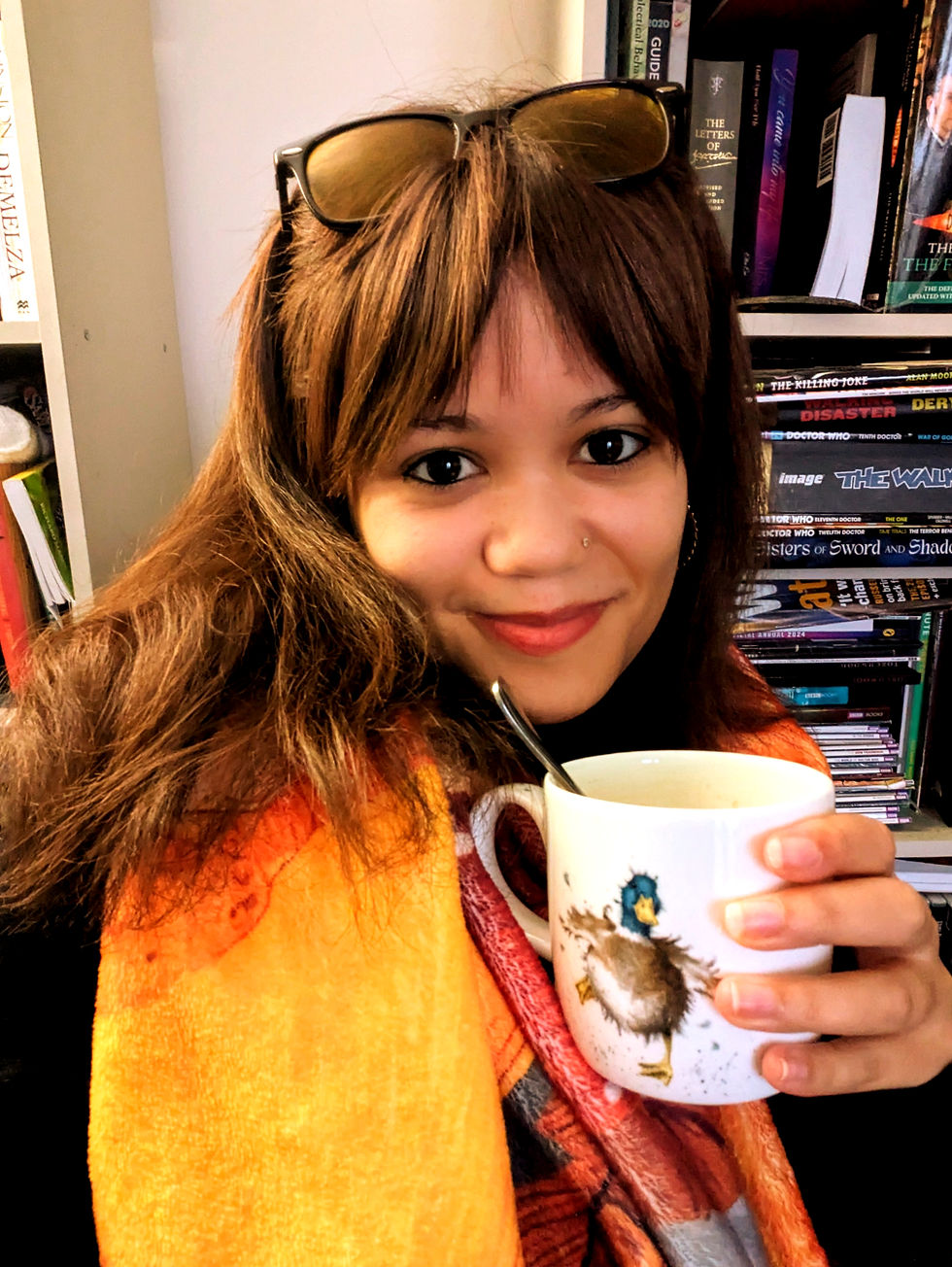
Hey! I'm Chelsea - a professional book editor at Stand Corrected Editing, my editorial business in the UK. If you would like me to edit your manuscript, please get in touch!
With my book editing services and packages, I hope to spread my knowledge and expertise on how to make your novel a success, and be a mentor to others who long to pursue a career as an author!


